Company
Blox
Year
2021
Roles
Modular Design
The Lean Approach
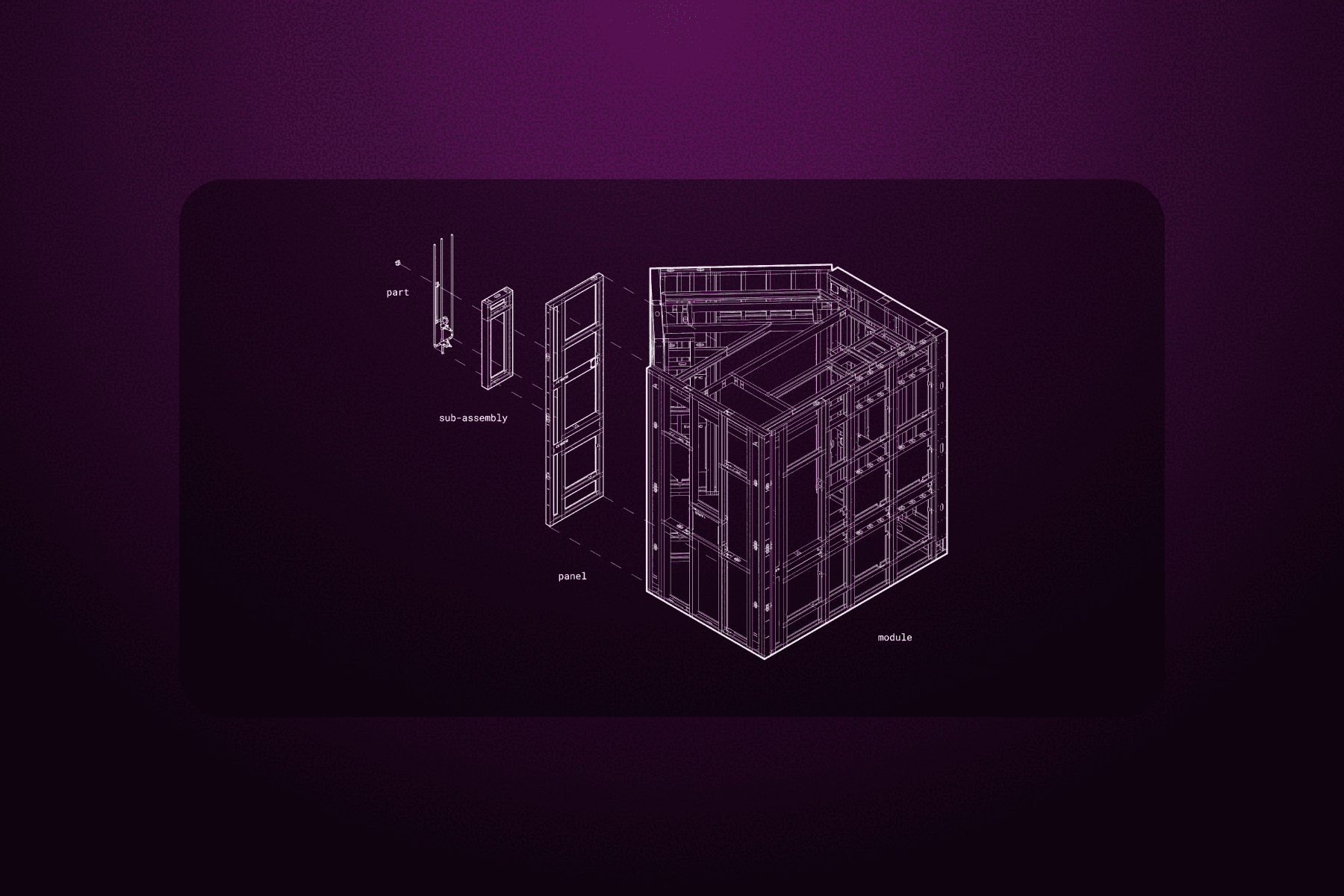
Working across both physical manufacturing and digital product design revealed a fundamental truth: efficiency comes from modularity. Whether building hospital infrastructure or design systems, the principles of minimizing waste and maximizing reuse create scalable, production-ready solutions.
+62%
in Efficiency
-21
of Unique Parts
The core principle of lean manufacturing—eliminating Muda (waste)—translates directly to design systems. Just as physical products benefit from fewer unique parts, digital systems thrive when component counts are minimized. Each unique component requires:
Documentation and maintenance
Cross-functional coordination
QA and accessibility validation
Developer implementation time
Impact: More components mean more coordination overhead, slower velocity, and increased technical debt.
Designing for Multiple Configurations
The most efficient components accommodate multiple use cases without modification. This approach:
Reduces the total component count
Increases consistency across products
Accelerates implementation
Simplifies maintenance
Subassembly Architecture
Nesting Components for Maximum Value
Individual components gain power when grouped into subassemblies. Like Russian nesting dolls, complex interfaces are built from simpler, reusable parts. This creates:
Offline optimization: Complex patterns can be refined independently
Increased throughput: Teams work in parallel on different layers
Captured complexity: Sophisticated functionality packaged in simple APIs

Real-World Application: The Hospital Headwall
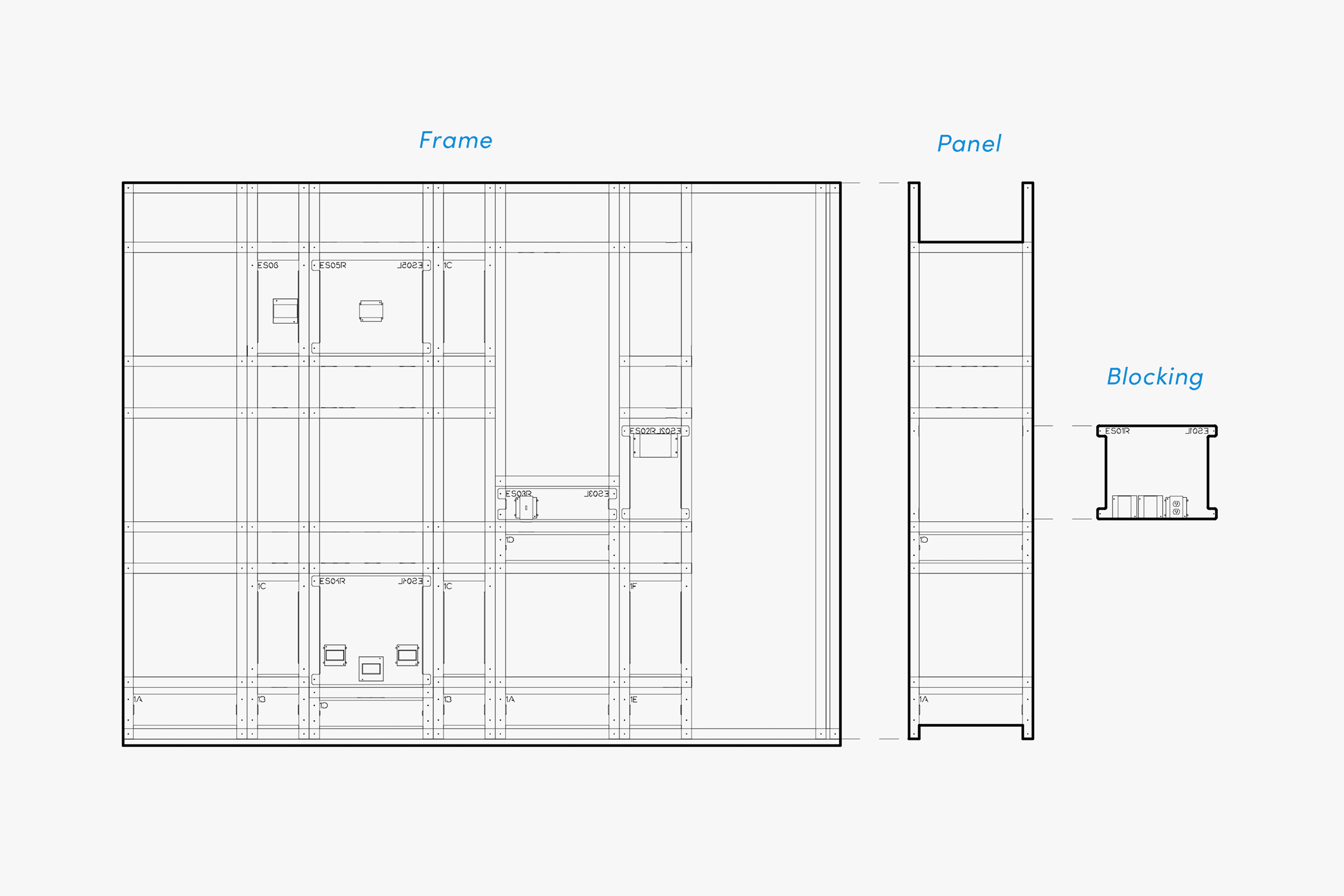
Challenge: Design a structural frame for a hospital headwall supporting numerous electrical and plumbing devices while meeting code requirements and maintaining manufacturing efficiency.
Solution: Built on a standard 2×2 grid panel system, customized only where necessary. By using existing frameworks and repeating blocking panels:
Reduced unique parts from 34 to 13
62% increase in efficiency
Maintained flexibility for various configurations
Inherited proven manufacturing workflows
Translation to Digital Design Systems
Information Architecture
Organize components by type and nest related elements. This creates hierarchies that are:
Intuitive to navigate
Easy to maintain
Scalable as the system grows
Component Libraries
Maintain a design system where components are reused across contexts:
Maximizes individual component impact
Reinforces brand consistency
Reduces design and development time
Implementation
Well-structured component architecture means:
Code written once, debugged once
Referenced repeatedly across products
Faster feature development
Reduced maintenance burden
Key Principles
Minimize Unique Parts: Every additional component has downstream costs. Question whether new components are truly necessary.
Design for Reuse: Build components that accommodate multiple configurations rather than single use cases.
Create Subassemblies: Group related components into patterns that can be maintained and optimized independently.
Think Systematically: Your design decisions impact engineering, QA, documentation, and ultimately the end user.
Results
By applying lean manufacturing principles to design systems:
Faster product development cycles
Increased consistency across platforms
Reduced maintenance overhead
Improved collaboration between design and engineering
Scalable systems that grow efficiently
The closer design and development work together—seeing the full lifecycle from concept to production—the more opportunities emerge to validate ideas quickly and make decisions that truly serve users downstream.
More Work